%20(1)-1.svg)


A business podcast is one of the few content formats that lets a company speak to its audience for...
It’s always the same. You arrive on location, open your bag, and instantly regret your life choices. A maze of cables and a mixer that weighs more than your carry-on.
Meanwhile, listeners don’t care that your gear setup resembles a BBC outside broadcast unit.
They care about one thing: does it sound like a professional studio… even when you’re absolutely nowhere near one?
Capturing broadcast-quality audio outside the studio is increasingly how the smartest podcasters work, from event floors to office corridors to wherever the story actually happens. And if you’re relying on a traditional setup, there’s a good chance you’re making things harder than they need to be.
Here’s how to make a podcast with broadcast-quality audio wherever you are.
The short answer
You get broadcast-quality audio outside the studio by capturing clean, consistent voice recordings at the source, controlling unpredictable ambience, and using tools that adapt to real-world environments. With modern portable kits and built-in enhancement, you can reduce setup time, protect the clarity of speech, and produce a polished sound without relying on perfect rooms or bulky equipment.
TL;DR
- You can get studio-quality sound outside a studio with the right field kit.
- Clean voice capture matters more than the room you’re in.
- Modern podcasting tools, like Nomono, let you record, clean up, and publish fast, wherever the story happens.
The portable-podcasting problem no one talks about
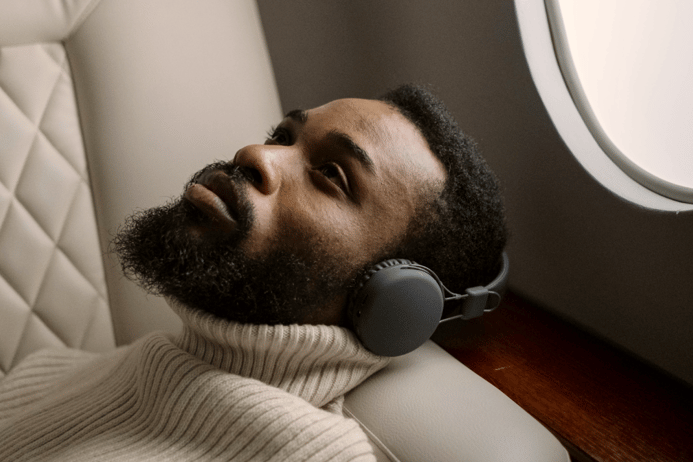
Let’s be honest, most podcast gear was designed for a world where recording happened in one place. But that’s not how a lot of podcasters work anymore.
Today’s podcasters are recording backstage at events, in offices they don’t control, out in the field with guests who turn up five minutes late, in cafés, corridors, hotel lobbies, and sometimes… the car park.
And listeners?
They expect it all to sound perfect.
In fact, over half of podcast listeners (51.1%) expect audio quality similar to professional radio broadcasts like BBC or NPR. Poor sound quality can cause listeners to abandon, no matter how good your story is.
But traditional podcast kits don’t travel well. They’re good in the right conditions, but take them outside the studio, and suddenly you’re fighting:
- background noise that changes every five minutes
- echoey rooms that rob your voice of warmth
- guests with zero mic technique
- bulky gear that takes too long to set up
- post-production sessions that eat half your week
What goes wrong: A typical podcast episode requires 4-5 times the length of your recorded audio just for editing alone. Record a 30-minute interview? Plan for 2-3 hours of manual editing minimum. And that's before you've tackled noise cleanup, level balancing, or content refinements.
But here’s the thing most podcasters eventually find out:
Great on-location sound has nothing to do with finding the perfect room.
It has everything to do with having the right field kit.
And once you solve for capture, everything else gets easier, including the noise, the levels, the workflow, and the listener experience.
So let’s look at what this actually means in practice.
What “broadcast-quality anywhere podcasting” looks like
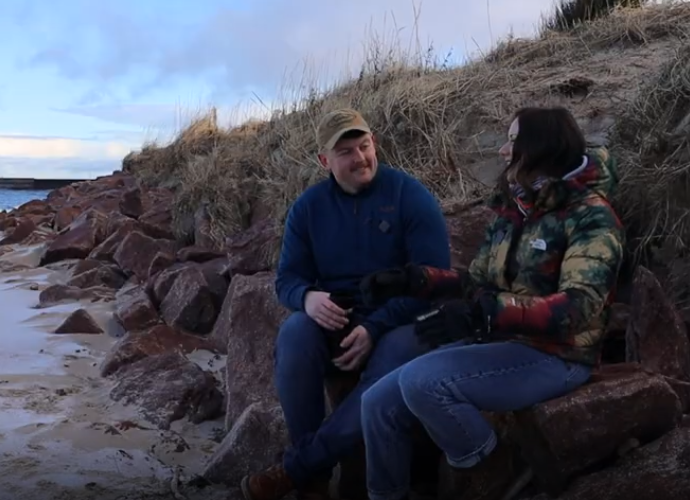
Every podcaster has their own collection of “please don’t let this be the recording” stories:
- The crowded expo hall.
- The echo-filled office.
- The outdoor interview that was a creative masterpiece… until the wind decided it wanted a feature credit.
Here’s what those moments normally look like, and how to turn them into clean, confident, broadcast-quality audio.
Scenario 1: How to make a podcast when recording at a noisy event
The reality:
Events are sensory overload. There’s PA chatter, clattering crockery, people who forget they’re standing next to your mic… all the good stuff.
What usually happens:
Your dialogue gets swallowed by room noise. You spend hours in post trying to scrape voices out of the background with EQ, noise reduction and prayers.
What pros do instead:
- Use lightweight, wireless mics that isolate voices at the source
- Capture ambience intentionally, not accidentally
- Monitor from your phone so you can adjust as the room changes
The outcome:
You get dialogue that cuts through the chaos, which is clean, warm, and studio-clear, even when you’re metres away from a coffee grinder.
Scenario 2: A last-minute office interview (in the worst room possible)
The reality:
Corporate meeting rooms look modern, but sound like tiled bathrooms. Glass, hard walls, reflective surfaces… not ideal.
What usually happens:
Your guest leans back. Reverb takes over. You sound like two people trying to have a heartfelt conversation inside a shipping container.
What pros do instead:
- Clip-on mics keep the voice close and consistent
- Auto-levelling handles guests who swivel, shift, or forget they’re mic’d
- Gentle enhancement keeps reflections under control without flattening the sound
The outcome:
A warm, intimate conversation that sounds intentional without any compromise.
Scenario 3: How to make a podcast outdoor (without the wind taking over the episode)
The reality:
Recording outdoors is beautiful… and unpredictable. Wind, passing cars, cyclists with loud freehubs — ambience is either magical or murderous.
What usually happens:
You end up with gorgeous content ruined by gusts, rumbles, and noises you didn’t even hear at the time.
What pros do instead:
- Proper wind protection and weather-safe mics
- Tools that adapt to movement and unpredictable conditions
- Spoken-word enhancement that protects clarity without killing atmosphere
The outcome:
A cinematic feel: rich ambience behind voices that stay crisp, balanced, and front-and-centre.
Scenario 4: Multi-guest conversations on the move
The reality:
Moving recordings create incredible energy, but technically, they’re a nightmare. Distances change, people talk over each other, and the environment changes constantly.
What usually happens:
One person sounds perfect, someone else sounds like they’re narrating from down the corridor.
What pros do instead:
- Give each participant a wireless mic with consistent gain
- Use spatial separation or panning to maintain clarity between voices
- Let auto-levelling smooth out jumps without squashing dynamics
The outcome:
You get lively, natural conversation and a clean, listenable mix — the holy grail of mobile podcasting.
Scenario 5: Turning a live moment into a publish-ready clip
The reality:
Some of the best moments happen unexpectedly, but rarely in studio conditions.
What usually happens:
You capture it on a phone. The idea is brilliant, but the audio is unusable.
What pros do instead:
- Record with proper mics even when it's spontaneous
- Use instant cloud upload to clean and balance the clip on the spot
- Apply one-click enhancement to get it publish-ready fast
The outcome:
You can share the moment while it’s still relevant, and it sounds like you planned it all along.
Related reading: Best podcasting equipment: A buyer's guide for creators
The field kit checklist: what you actually need to make a podcast anywhere
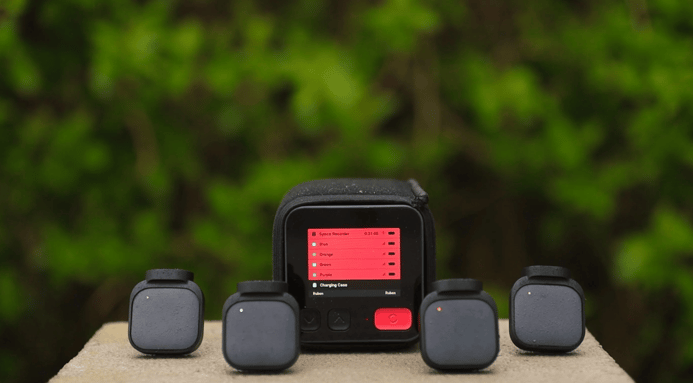
Let’s cut to the chase. You don’t need a suitcase full of gear to sound good on the move. What you need is a field kit that works with unpredictable environments.
Here’s what belongs in every podcaster’s “broadcast-quality anywhere” kit in 2026.
1. Wireless mics that keep voices close (and consistent)
The fastest way to ruin a recording? Letting the mic drift away from the person speaking. Wireless clip-on mics solve that instantly. You get:
- consistent voice presence
- minimal handling noise
- freedom to move without going off-axis
- natural, warm tone even in echoey spaces
If your mics rely on “perfect mic technique”, you’re already making life harder for yourself.
2. A podcasting recorder that doesn’t need a ‘quiet room’
Field environments are messy. That’s the point. Your recorder should:
- adapt to shifting background noise
- keep levels balanced even when speakers move
- avoid clipping during loud moments
- stay portable enough to carry everywhere
Traditional recorders were built for controlled studios. A modern field kit is built for reality.
3. Intelligent enhancement to clean up the chaos
Real talk: post-production shouldn’t be a rescue mission. A good mobile setup will:
- reduce crosstalk
- tame reverb
- smooth level jumps
- remove broadband noise without destroying tone
The goal? Fix problems before they become hours of editing, not after.
4. A fast cloud workflow for on-the-go editing
When you’re recording away from your studio, speed is everything. A smart cloud workflow gives you:
- instant uploads
- automatic backup (goodbye, lost files)
- the ability to enhance or edit while you’re still on location
- quick sharing with co-hosts or editors
The result? Episodes get from record → publish in hours, not days.
5. A ‘grab-and-go’ bag that lives in your backpack
The best field kit is the one you always have with you. You shouldn’t need:
- a mixer
- multiple cases
- stands, booms, cages, or a degree in cable management
A simple, compact kit means you’re always ready, whether a guest pops up, a moment unfolds, or you spot a story worth capturing.
6. Optional but powerful: tools for spatial depth
If your show leans towards narrative storytelling or immersive interviews, spatial recording adds:
- realism
- a sense of location
- atmosphere that enhances the listening experience
It’s not for every format, but when used intentionally, it elevates mobile recording from “good” to “cinematic”.
Related reading: How to start a business podcast (that drives results)
The 4 biggest challenges of recording podcasts on the move (and how to solve them)
Recording outside a studio isn’t necessarily hard. But it is very unpredictable. And unpredictability is exactly where traditional podcast setups fall apart.
Here are the four challenges every podcaster runs into on the move, and the practical fixes the pros rely on.
Challenge #1: The ‘uncontrolled environment’ problem
What goes wrong:
Offices echo. Events roar. Outdoors… well, outdoors does whatever it wants. Traditional mics pick it all up, usually equally.
Why it happens:
Studio mics are tuned for quiet, consistent rooms. Take them into the real world and they behave like overenthusiastic tourists: they record everything.
How pros beat it:
- Use close-positioned wearable mics that prioritise the voice
- Let the kit handle adaptive noise reduction automatically
- Accept some ambience (the good kind) instead of trying to eliminate it
Result: A clear voice with controlled environmental sound. Not the other way around.
Challenge #2: Too much gear, too little time
What goes wrong:
You’re 10 minutes from an interview and you’re still untangling cables. Meanwhile, your guest is hovering awkwardly, wondering why this looks like a broadcast truck.
Why it happens:
Traditional rigs weren’t built for speed. They’re built for precision. And precision takes time.
How pros beat it:
- Compact kits that don’t need stands, mixers, or half your boot space
- Wireless systems that are ready in seconds
- Pre-set workflows so you can hit record immediately
Result: You look prepared, nimble, and confident, not like someone assembling Scandinavian flat-pack furniture under pressure.
Challenge #3: Guests with no mic technique
What goes wrong:
They lean back.
They swivel in their chair.
They tap the table.
They look everywhere except the mic.
Why it happens:
Most guests aren’t broadcasters. They’re just humans… who can’t sit still.
How pros beat it:
- Clip-on mics that follow the voice, not the chair
- Auto-levelling that compensates for movement
- Tools that reduce crosstalk so overlapping voices don’t become a blur
Result: Natural conversation without the “could you lean in again?” interruptions.
Challenge #4: Post-production that eats your week
What goes wrong:
A simple 30-minute on-location interview becomes a 3-hour edit filled with noise cleanup, EQ fiddling, and trying to fix a problem you wish you’d caught earlier.
Why it happens:
Studio workflows assume you’re starting with clean audio. Location recording… doesn’t.
How pros beat it:
- Capture clean audio at the source (reduces 80% of post fixes)
- Use enhancement tools that get rid of broadband noise in seconds
- Edit in a cloud workspace so you’re not stuck behind a desk
Result: More time publishing, less time firefighting.
The new era of on-location podcasting
Here’s the truth: your audience doesn’t care whether you’re recording in a studio, a boardroom, or the middle of a bustling expo hall. They care about clarity. They care about warmth. They care about whether your show feels professional.
And that’s no longer tied to a place.
It’s tied to your kit and how prepared you are to record wherever the story actually happens.
The podcasters winning in 2026 are those who:
- travel light
- capture clean audio at the source
- trust tools that adapt to the environment
- publish faster because their workflow isn’t fighting them
You don’t need to overhaul your entire setup. You just need a field kit that lets you say “yes” to opportunities instead of worrying about whether the room will ruin your sound.
So here’s your next move:
- Build your portable kit using the checklist above.
- Test it on your next location interview, even if it’s just in a noisy office.
- Start recording where the best stories actually happen, not just where the acoustics are safe.
And now you’re ready for it.
Ready to take your field recordings to a studio-grade level? Explore the Sound Capsule, trusted by creators who can't compromise on quality.
%20(1).png?height=200&name=Mask%20group%20(11)%20(1).png)