%20(1)-1.svg)

Search for “best podcasting equipment” and you’ll find no shortage of lists telling you what to...
When recording a podcast outside, you’re dealing with movement, noise, and environments you don’t control. What worked perfectly at your desk or studio doesn’t work at an event, in an office, or walking down a street.
You still want audio that’s balanced, consistent, and ready to publish. You just have to work with the environment instead of trying to control it.
Because if you can handle recording outside the studio, you can record almost anywhere.
In this guide, we’ll break down how to do exactly that.
Podcast recording outside: quick takeaways
- You can record a professional podcast anywhere if you control the environment, mic technique, and levels
- Outside the studio, movement and background noise can become your biggest challenges
- Stable levels at the recording stage reduce the need for heavy editing later
- Reliable gear and workflow matter more when there’s no second take
- When your setup adapts to the environment, recording anywhere becomes repeatable
➡️ You might also like: Podcast recording: How to record a professional podcast anywhere
What changes when you record a podcast outside the studio
Recording in a studio gives you control, but step outside of that (without the right kit), and you lose most of it.
Noise becomes unpredictable, people move, and rooms aren’t treated. When you go outdoors, you trade echo for wind and ambient sound. Meanwhile, things like mic position and levels become harder to manage without noticing.
When recording a podcast outside the studio, you’re not trying to control the environment, you’re trying to work with it.
That means paying closer attention to:
- What podcast recording equipment you use
- Where you place people in the space
- How microphones are positioned and maintained
- How levels are handled as conversations change
- What risks could affect the recording (battery, storage, movement)
In other words, recording outside the studio is less about perfect conditions, and more about making smart adjustments. Once you understand that, you’re ready to build a setup that actually works in real-world situations.
➡️ Related reading: Best podcasting equipment (2026): A buyer’s guide
The 5-step outdoor podcast recording framework
Once you step outside the studio, consistency comes from having a repeatable way of working and a process you can rely on, even when conditions aren’t perfect.
Here’s a five step framework you can follow:
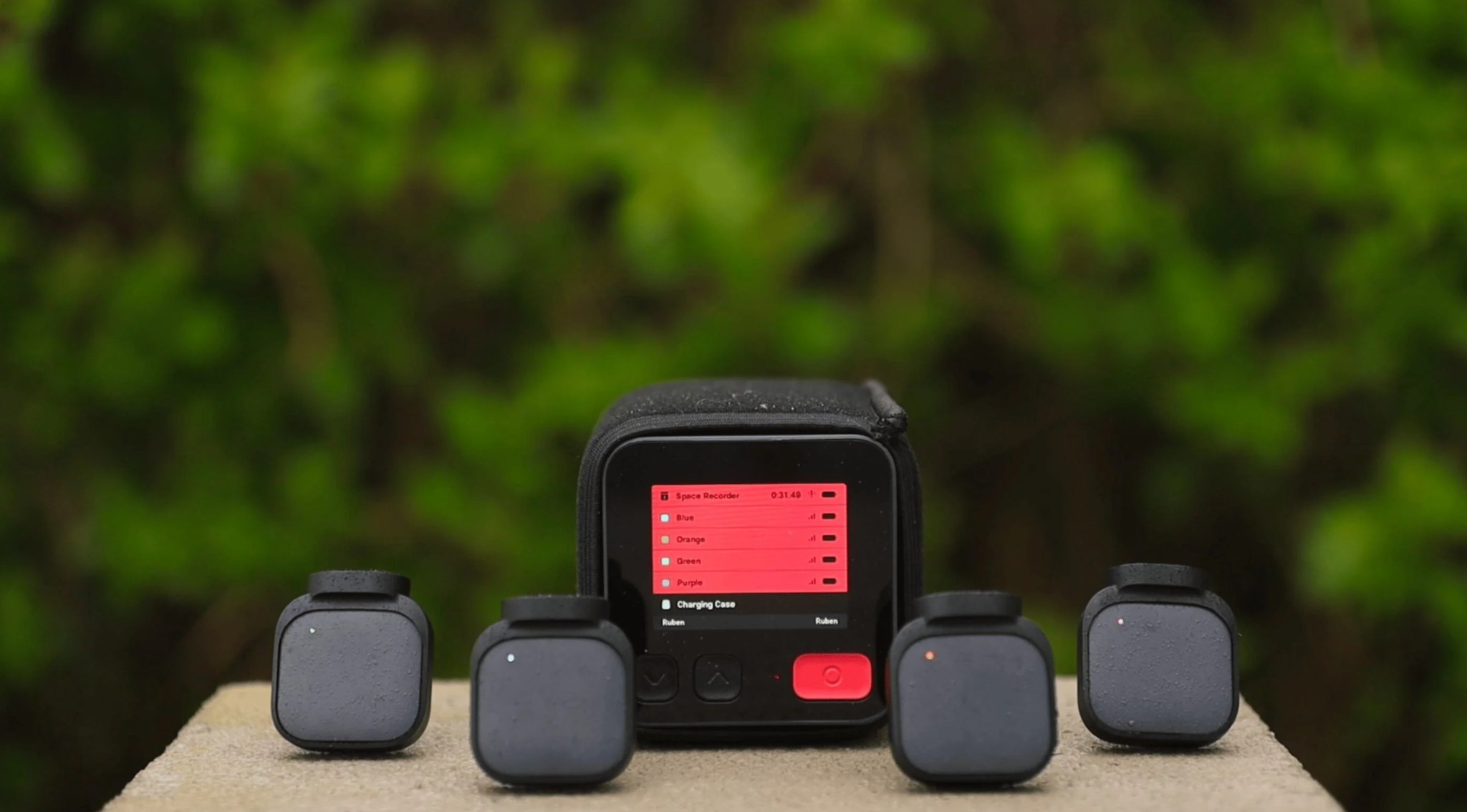
[Or if you want an even easier approach, this is exactly the kind of workflow Nomono replaces with a much simpler set-up. Find out more >]
1. Assess your environment for optimal on-location recording
Before you even think about microphones, look at the space. Indoors, hard surfaces will reflect sound. Large rooms add reverb. Offices often introduce background noise you didn’t notice at first. Outdoors, you lose echo, but wind and movement take over.
That’s why we recommend you take a minute to assess where you are before setting anything up.
Small changes help:
- Move away from walls or glass
- Avoid the centre of noisy areas
- Position people so they’re not competing with background sound
2. Get mic placement right (and keep it consistent)
Microphone technique becomes more important as soon as people start moving. Distance changes, people turn their heads, and conversations become less controlled. Even slight movement can create noticeable differences in volume and tone.
So instead, focus on consistency:
- Keep microphones close to each speaker
- Make sure they stay in position throughout the conversation
- Avoid pointing mics toward reflective or noisy areas
If you’re using wearable wireless mics, this becomes much easier to maintain over time.
3. Stabilise levels as early as possible
Level issues are harder to fix later than most people expect. For instance, if someone speaks louder, turns away, or laughs mid-sentence, you’ll notice it in the recording. And once levels peak or drop too far, you’re into repair work.
Essentially, the more stable your levels are during recording, the less work you’ll have to do afterwards.
At a minimum:
- Leave headroom to avoid clipping
- Keep speakers roughly balanced
- Monitor if you can
In faster-moving environments, automatic level control can take a lot of pressure off.
4. Protect the recording
Outside the studio, reliability becomes part of your setup. Batteries run out, storage fills up, and files fail to transfer.
So, before you hit record:
- Check battery levels
- Confirm you have enough storage
- Make sure files are saving locally
- Know how you’ll access them afterwards
5. Keep the podcast recording workflow simple
Recording is only half the job. If your files are hard to access, messy to organise, or require heavy clean-up, the whole process slows down quickly. This is where many setups fall apart. Not during recording, but afterwards.
In other words, a good recording setup should carry through to editing:
- Clear file structure
- Minimal corrective work
- Fast path from capture to publish
When those pieces line up, recording outside the studio becomes something you can repeat, instead of something you have to wrestle with every time.
Real-world scenarios: How to record a podcast outside the studio professionally
The next thing I’m thinking about is how this actually plays out once you’re out there recording. Because “on-location” can mean a lot of things. A conference floor is very different from a quiet office. A walk-and-talk is nothing like a seated interview.
Here are a few common scenarios, and how to approach each one. (If this feels like a lot, there are tools (like Nomono) that take care of most of it for you.)
Podcast recording at events and conferences
This can be one of the hardest environments to get right. You’ve got crowd noise, unpredictable movement, and very little control over where conversations happen. Meanwhile, if you’re capturing something live, there’s no redo.
So instead:
- Stay close to your speakers with microphones
- Position yourself slightly away from the busiest areas (even a few metres helps)
- Avoid relying entirely on venue audio, it’s built for amplification, not recording
If you’re moving between guests quickly, setup speed becomes just as important as sound quality.
Recording walk-and-talk podcasts
These feel natural to record, but they introduce constant movement. People turn their heads, distances change, and clothing or handling noise can creep in without you noticing.
To keep things stable:
- Use microphones that move with the speaker
- Keep placement consistent throughout
- Be mindful of wind if you’re outdoors
When it works, this format feels effortless. When it doesn’t, audio becomes uneven very quickly.
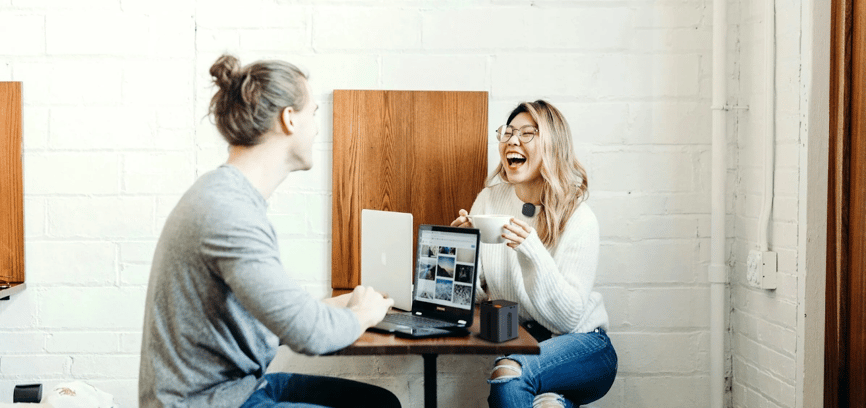
Recording podcasts in offices or client spaces
You might think this environment would be one of the easiest to record in. But, it’s not straightforward. In reality, these spaces are often full of reflective surfaces and background noise. Glass, large tables, and open-plan layouts all affect how voices are captured. So take a minute to adjust the space before you start.
Simple fixes:
- Move away from large reflective surfaces
- Sit closer together to keep mic distance consistent
- Turn off anything adding constant background noise where possible
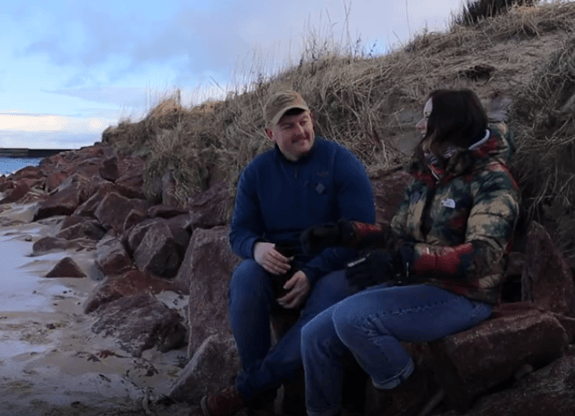
Outdoor and location-based podcast recording
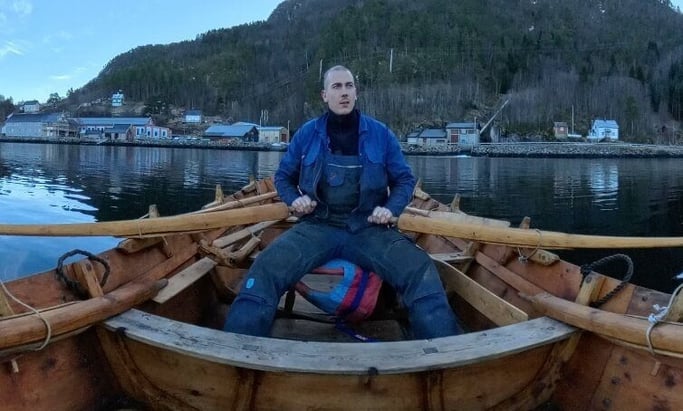
Outdoors removes one problem and introduces another. Echo disappears, but wind and ambient sound take its place. In other words, you’re trading one challenge for a different one.
To handle it:
- Use wind protection where possible
- Position speakers so wind isn’t hitting microphones directly
- Accept some ambient sound. The goal is to control it, not remove it completely
Talking of examples, this is where more natural, documentary-style podcasts come into their own. The environment becomes part of the story, as long as voices remain intelligible.
Across all of these, the same principle applies.
Once your setup adapts to the environment, recording outside the studio stops feeling unpredictable.
Common mistakes when recording a podcast outside the studio
Most issues come from small decisions that add up. Everything feels “good enough” in the moment, but once you listen back, the cracks start to show.
Here are the ones that come up most often.
❌ Treating every environment the same
It’s easy to carry over a studio mindset into completely different spaces. Same setup. Same positioning. Same expectations. But digging into real recordings, the environments behave very differently. What works in a quiet room might not hold up so well at an event or outdoors.
Instead, adjust your approach based on where you are. Even small changes in positioning or setup make a noticeable difference.
❌ Letting mic distance drift
This one happens constantly, especially with multiple speakers. People lean back, turn their heads, and move position without thinking. As a result, levels fluctuate and voices lose consistency. Remind speakers to stay consistent with mic position. It’s one of the simplest ways to protect audio quality.
❌ Relying on editing to fix everything
It’s tempting to think you’ll sort it out later. Noise reduction, EQ, compression — all of it can help. But there’s a limit to how much you can recover. This brings me to the next lesson: editing should refine, not repair. The better your recording, the faster and cleaner your edit will be.
❌ Ignoring movement
Outside the studio, people rarely stay still. And even when they try to, conversations naturally shift. Movement introduces small inconsistencies that stack up over time.
Here’s how to tackle it:
- Use setups that allow for movement
- Keep microphones stable relative to the speaker
- Expect some variation, and minimise it where you can
❌ Overcomplicating the setup
When things feel uncertain, the instinct is often to add more gear, including more cables and more devices. And at the same time, more points of failure.
But there’s a caveat: complexity slows you down and increases the chances of something going wrong. Simpler setups tend to be more reliable outside the studio.
Once you avoid these common mistakes, you’re in a position to get consistently good results, wherever you’re recording.
What makes outdoor podcast recording sustainable?
Recording outside the studio once is easy enough. Doing it consistently is where most setups break down.
The next thing I’m thinking about is what happens after a few episodes. Setup takes longer than expected, files end up scattered across devices, and editing takes hours because levels are uneven or noise needs fixing. Over time, that all adds up.
|
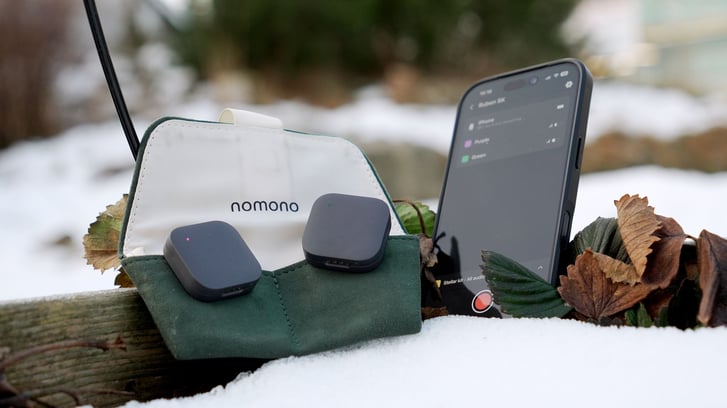
This process can take hours or minutes, depending on your setup. Nomono is designed to remove a lot of these steps entirely.
|
In other words, the challenge is capturing good audio and doing it in a way you can repeat without it slowing everything down.
That comes down to a few things:
- Setup speed — how quickly you can get from arrival to recording
- Consistency — whether your audio sounds the same across different environments
- Workflow — how easily your files move from recording into editing and publishing
But it’s not enough to get one of these right. They need to work together.
If your setup is portable but your files are hard to manage, production slows down. If your audio is clean but takes hours to edit, publishing becomes inconsistent.
The key takeaway here? Aim for a workflow that connects everything:
- Record without complex setup
- Access files immediately after capture
- Reduce the amount of manual clean-up
- Move quickly into editing and publishing
This allows recording outside the studio to become something you can build into your process, rather than something that disrupts it.
And once that happens, you’re no longer limited by location.
Need inspiration? Up next, are a few on-location podcasts we love…
Made with Nomono: podcast recording outside the studio
It’s easy to talk about recording a podcast anywhere. It becomes real when you see how it actually works.
Talking of examples, here are a few podcasts using Nomono in environments that would normally make recording difficult.
Walk-and-talk formats
Walk In The Park With Kate
A podcast recorded while moving. No fixed setup, no controlled space. Conversations unfold naturally as the host walks with guests, which means movement, changing surroundings, and constant variation.
The result works because the setup moves with the speakers, keeping voices consistent while the environment adds context.
Creative spaces and non-traditional environments
Hold The Gate (YouTube tattoo podcast)
Recorded outside a traditional studio, often in creative or working environments. That means background activity, less control over acoustics, and more movement between speakers.
In other words, the setup has to adapt to the space, not the other way around.
Events and pop-up recordings
How To Cut It
This podcast regularly records at events and on location. Fast setup is essential. There’s limited time, changing guests, and no guarantee of ideal conditions.
As a result, portability and reliability become part of the production process, and not just a nice-to-have.
Across all of these, the you’ll notice how the environment changes and the format changes, but the setup always holds up, thanks to Nomono.
Make professional podcast recording easy anywhere
Recording a podcast outside the studio will always involve more variables. There’s more noise, movement, and changing environments. But once you have the right kit and understand how to handle them, they stop being blockers.
Here’s what you need to remember:
- Work with the environment, instead of against it
- Keep microphones consistent
- Stabilise levels at the source
- Keep your setup simple and reliable
Then, and only then, are you ready to make recording anywhere repeatable.
If you’re looking to build a setup that supports this kind of workflow — from recording through to editing and publishing — it’s worth exploring systems designed for exactly that.
Because once your setup travels with you, your content can too.
If you want to record outside the studio without compromising on sound, your setup needs to do more than just capture audio. It needs to handle movement, balance levels, and carry your workflow from recording through to publish without slowing you down.
That’s exactly what Nomono is built for.
👉 See how Nomono helps you record professional podcasts anywhere
.png?height=200&name=Frame%202053%20(1).png)