%20(1)-1.svg)

%20(1).png?height=200&name=Mask%20group%20(11)%20(1).png)
Podcast recording should be clear, balanced, and ready to publish, whether the conversation happens...
A business podcast is one of the few content formats that lets a company speak to its audience for 30 minutes at a time, without competing for attention. That’s why founders, marketing teams, and comms leads want to know: how do we start a business podcast?
A business podcast only works when three things are decided early:
- who the podcast is for
- what role it plays in the business
- how it will be produced consistently
This guide walks through these three key things so that you know how to start a business podcast in a way that’s realistic for busy teams, focused on outcomes, and designed to scale as the show grows.
Key takeaways
- What a business podcast is for
- What you need to start
- How long it takes
- Common mistakes to avoid
- What makes a business podcast succeed
What is a business podcast, and why do companies start them?
Let’s kick things off with a simple definition. A business podcast is a long-form audio series created to support a specific business goal. The goal might be thought leadership, brand building, customer education, recruitment, partnerships, or internal communication. The format can develop and change over time. But the role inside the business needs to be clear from day one.
Without knowing that, decisions around format, guests, and frequency can easily fall apart.
You can see the problem here. Episodes get published, momentum fades, and the podcast becomes another item on the backlog.
So instead, the most effective business podcasts act as a distribution layer for expertise that already exists inside the company, such as leadership insight, subject-matter knowledge, customer conversations, and industry news.
As a result, podcasts become a way to create sustained attention. Listeners opt in, spend real time with the brand, and build familiarity with the people behind it.
This brings me to the next lesson: before choosing a name, a format, or any equipment, decide the job the podcast is meant to do for the business.
Choosing the right format for a business podcast
Once the role of the podcast is clear, it’s tempting to overthink structure. Episode length, publishing cadence, and video versus audio. All this is key, but first, what’s essential is how much responsibility the format places on your team.
Let’s say you’re running a lean marketing function. Interview-led formats work well because the thinking is shared. Guests bring energy, perspective, and reach. Preparation stays focused. Episodes are easier to sustain over time.
On the other hand, solo episodes give you full control over the message. They’re effective for thought leadership and clear points of view, but they demand more prep and more confidence carrying the conversation alone. (I find this hard to do consistently without outlines or scripts.)
Panel discussions sit somewhere in the middle. They’re great for nuance and debate. They also introduce more coordination, more recording complexity, and more editing effort.
Interestingly, many strong business podcasts settle into a hybrid approach over time as constraints change and teams learn what’s sustainable.
What equipment do you need to start a business podcast
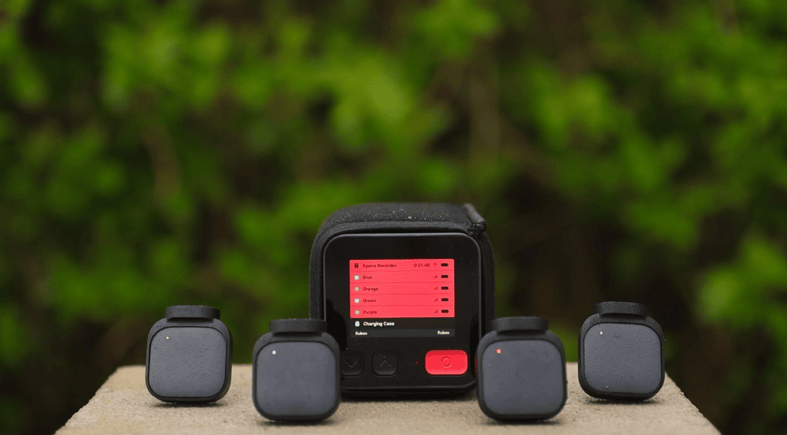
Of course, sooner or later, the question comes up.
What equipment do we actually need to get this off the ground?
We often find this is where teams lose momentum. Lists of microphones and accessories don’t help much if they’re disconnected from how you actually work.
Instead of thinking in terms of individual pieces of gear, it helps to think in terms of the entire recording flow. This includes how voices are captured, how reliably sessions are recorded, and how easily audio moves from conversation to publish-ready.
That’s the lens we use in our full podcasting equipment guide, and it’s the one that holds up best for business teams.
To get started, most business podcasts need three things:
- clear, consistent capture of every voice
- a setup that works in real spaces, not just ideal ones
- a workflow that doesn’t fall apart once more people are involved
This is where all-in-one systems come in. When microphones, recording, storage, and post-production are designed to work together, setup gets faster and output becomes more predictable.
For many teams, Nomono becomes the backbone of their entire podcast. Conversations are recorded locally, voices are captured individually, and audio is ready for enhancement and editing without file juggling or complex handoffs.
You can take this a step further as the podcast grows. Solo setups evolve into multi-speaker conversations. Desk recordings turn into office, event, or on-location sessions. A single workflow makes this much easier to manage.
Take it from Identified with Nabil Ayers: “We use Nomono for all our interviews. It lets us focus on the conversation itself, knowing the audio will hold up wherever we’re recording.”
For a show built around nuance and intimacy, reliability is key. Conversations happen in real spaces, with real people, and the production setup stays out of the way.

|
If you want the full breakdown, including how to choose equipment based on how you record, real-world setup examples, and when it’s worth upgrading, we’ve covered that in depth here: |
Recording and editing workflows (where most businesses struggle)
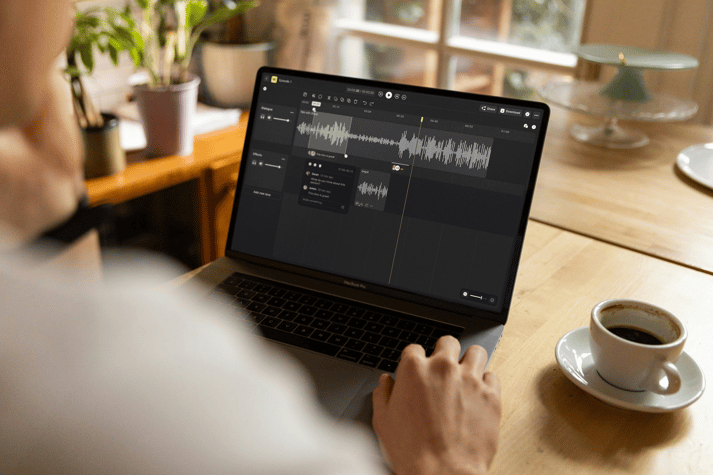
Once the conversation is over, the real work starts. Files need to be found, shared, reviewed, edited, approved, and turned into something publishable. This is where most business podcasts slow down.
I’ve seen this play out repeatedly. Audio lives on someone’s laptop. Edits are requested in documents. Feedback arrives out of order. Versions multiply. Momentum drops.
Meanwhile, the team is still trying to plan the next episode.
This is why workflow matters more than tools. A podcast that sounds good but takes too long to process will always struggle to stay consistent.
For business teams, the simplest workflows tend to win. Recording feeds directly into editing. Enhancements happen early. Everyone involved can hear the same version and comment in context.
When recordings move straight from capture into a shared workspace, there’s less manual handling and fewer points of failure.
Editing also becomes more predictable. Instead of fixing levels and cleaning up problems created during recording, teams can focus on tightening conversations and preparing episodes for distribution.
Over time, this has a compounding effect. Episodes get finished faster. Publishing stays regular. And the podcast stops competing with other priorities.
Publishing, promotion, and content reuse
Once an episode is finished, the next question is what happens after publish?
For most business podcasts, this is where things either start to compound or stall. The episode goes live, a link is shared, and then attention moves on to the next recording.
The teams that get more from podcasting think differently about this stage. They plan for reuse early.
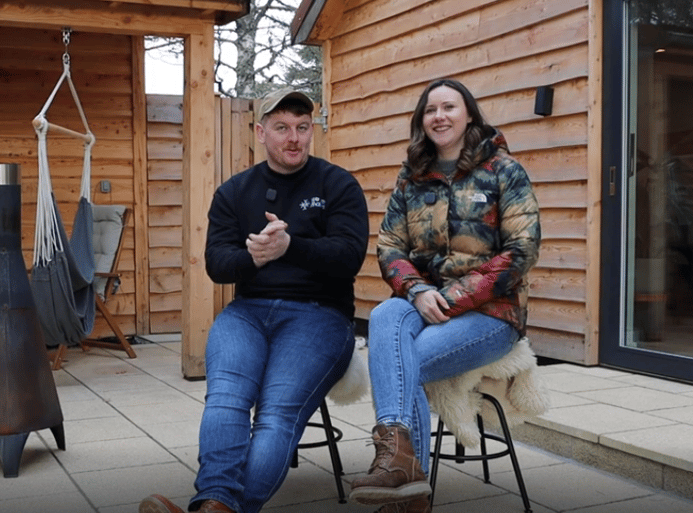
Take Kate from The Founder Walk. The format is simple by design: recorded conversations while walking outdoors. But each episode is treated as more than just a podcast release. Clips, pull quotes, and themes are reused across channels, keeping each conversation working long after it’s published.
That approach changes the economics of the podcast. One recording fuels multiple touchpoints, including website content, social posts, newsletters, and future conversations.
You can see the same thing across many podcasts made with Nomono. TimeTable London records each episode in a different pub, using the natural ambience as part of the story. Money For Change records weekly at Triodos Bank headquarters, feeding a reliable production rhythm that supports fast turnaround and consistent publishing.
In all cases, the common thread is how episodes are recorded in a way that makes them easy to access, review, and repurpose. A connected workflow helps here. When audio is already organised and ready to work with, reuse becomes part of the process rather than extra effort.
Common mistakes business podcasts make
Certain problems can show up again and again. Here are the most common mistakes we tend to see business podcasts making:
#1. Treating the podcast as a side task
I hate to say it, but one of the most common is treating the podcast as a side task. Recording gets squeezed between meetings. Editing waits for “free time.” Publishing slips without anyone quite noticing. Momentum fades long before anyone decides to stop.
#2. Launching the business podcast without a clear role
Another common mistake is when the podcast launches without a clear role inside the business. Topics sound interesting in isolation, but they don’t add up to anything coherent. Listeners struggle to understand why the show exists, and teams struggle to explain its value internally.
#3. Workflow issues
Workflow issues are close behind. Files might live in too many places. Feedback is late or out of context. And editing becomes heavier than it needs to be. This is usually where enthusiasm meets reality.
#4. The expectation gap
Then there’s the expectation gap. Early download numbers don’t match internal hopes. Promotion feels harder than expected. The podcast is doing its job, but the metrics people are watching don’t tell the full story.
These can be hard to fix once habits have set in.
Most of these issues trace back to the same place: decisions that were never made early on. Ownership, workflow, cadence, and reuse all need someone to care consistently.
How long does it really take to launch a business podcast?
The honest answer depends less on creativity and more on decisions. When the role, format, and workflow are clear, launching is fairly contained. When they’re not, timelines stretch without anyone quite noticing.
For most business podcasts, the initial setup takes a few weeks. That includes agreeing on the purpose, locking the format, choosing the best equipment, setting up recording, and running a first test episode. This is the thinking-heavy part, and it’s worth giving it proper space.
Recording the first episode is often the fastest step. Editing and review usually take longer than expected, especially when multiple people are involved, or feedback loops aren’t defined.
Where timelines slip is between episodes. Scheduling guests, carving out time, and fitting production around existing priorities adds friction. Without a repeatable process, each episode feels like starting again.
Even when you’ve got that all under control, the real work is maintaining rhythm. That’s where simple workflows and clear ownership make the biggest difference.
Business podcast launch checklist
At this point, hopefully things should feel clearer.
But before you hit record, it’s worth checking the basics.
Here’s a simple checklist to sense-check your setup:
- The podcast has a clearly defined role inside the business
- The audience is specific enough to guide topic choices
- The format matches the time and energy the team can realistically commit
- Recording works in the spaces you actually use
- Every voice is captured clearly and consistently
- Editing and review happen in a shared, predictable workflow
- Ownership is clear, from recording through to publishing
- Each episode has a plan for reuse beyond the podcast feed
If most of these are in place, you’re ready to move forward.
If a few feel shaky, that’s useful information. It usually points to workflow or ownership, not ambition or ability.
The takeaway: business podcasts work best when they’re treated as a system from the start. When recording, editing, and publishing fit together cleanly, consistency becomes achievable, and the podcast has room to grow.
Final thought
Starting a business podcast requires the right intention.
When the role is clear, the format is realistic, and the workflow supports the team behind it, podcasting becomes something you can easily sustain.
If you’re ready to start a business podcast (or simplify one that’s already running), Nomono is designed to support the full process. From capturing real conversations in real spaces to editing, reviewing, and publishing in one connected workflow.
→ Explore Nomono Studio
→ Discover the Stellar Kit
→ See how Sound Capsule works for teams and on-location recording
Great conversations deserve a setup that doesn’t get in the way.
If you still have unanswered questions, contact us or read our most frequently asked questions, below. →
Frequently asked questions about starting a business podcast
How do you start a business podcast?
To start a business podcast, begin by defining the role it will play in your business. Decide who it’s for, what outcome it should support (like brand awareness, lead generation, or internal communication), and how often you can realistically publish. From there, choose a format, set up a simple recording workflow, and focus on consistency rather than perfection.
What is the difference between a business podcast and a regular podcast?
A business podcast is created to support a specific business goal. This might include thought leadership, customer education, recruitment, or brand building. While entertainment podcasts focus primarily on audience growth, business podcasts are measured by outcomes such as engagement, influence, conversations, or downstream impact on the business.
How long does it take to launch a business podcast?
Most business podcasts can be launched within a few weeks. This includes planning the purpose and format, setting up recording and editing workflows, and producing a first episode. The biggest time investment usually comes from aligning stakeholders and setting up a repeatable process rather than the recording itself.
How often should a business podcast publish?
The best publishing frequency is one your team can sustain consistently. Many business podcasts publish weekly or fortnightly. Consistency matters more than volume, especially when the podcast is part of a broader content or communications strategy.
How do business podcasts make money?
Business podcasts typically generate value indirectly rather than through ads. Common outcomes include inbound leads, stronger brand authority, partnership opportunities, recruitment, and customer retention. Some businesses also use podcasts to support paid products, services, or events rather than monetising the podcast feed itself.
Can a business podcast generate leads?
Yes. Business podcasts can generate leads when they are aligned with a clear audience and business goal. This often happens through increased trust, familiarity with the brand, and follow-on actions such as demo requests, newsletter sign-ups, or sales conversations sparked by the podcast.
Do you need expensive equipment to start a business podcast?
No. You don’t need expensive equipment to start. What matters is capturing clear, consistent audio and using a setup that fits how and where you record. Many business podcasts start with simple setups and upgrade once the show proves its value.
Is a business podcast worth it for small teams?
A business podcast can be worth it for small teams if the scope and workflow are realistic. Choosing a manageable format, recording in real environments, and reusing each episode across multiple channels helps small teams get more value from the time invested.
Should a business podcast be audio-only or video?
Both approaches can work. Audio-only podcasts are often faster to produce and easier to sustain. Video podcasts can increase reach and content reuse, but usually require more time and coordination. The right choice depends on your team’s capacity and how the podcast fits into your wider content strategy.
How do you measure the success of a business podcast?
Success is measured by the role the podcast is meant to play. This could include listener engagement, inbound conversations, website traffic, leads influenced by the podcast, internal feedback, or long-term brand impact. Download numbers alone rarely tell the full story for business podcasts.